Church Street
Mary leaves her sweet shop carrying the brown attaché case used for the day’s takings.
Reported · Local archiveCase file 002 · Ormskirk, Lancashire · Unsolved
Remembered as the sweet-shop sisters. Killed at home.
Overnight on 5–6 May 1956, Margaret Jane and Mary Ormesher were killed at Ivy Dene, their home on Asmall Lane. The town knew them through Mary’s Church Street sweet shop. Seventy years later, no person has ever been officially identified as their killer.
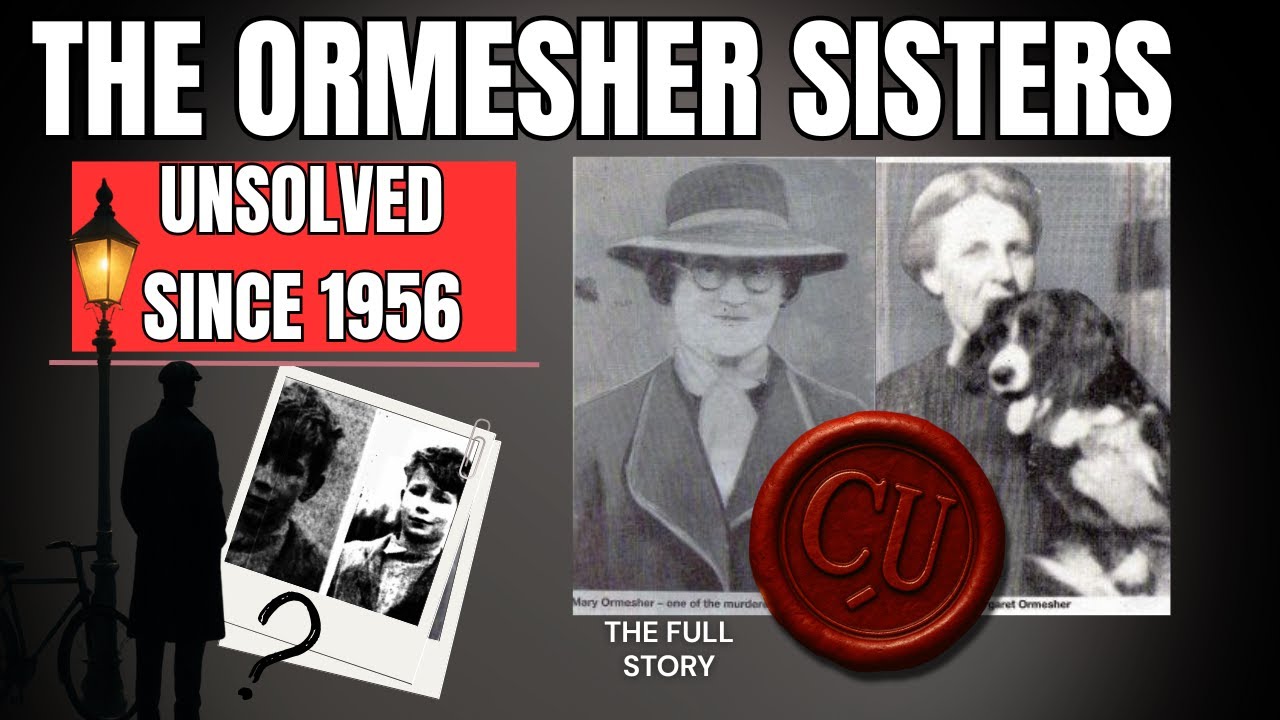
Mary ran a sweet and tobacco shop at 24 Church Street. Margaret kept their home and had cared for their mother, Emma.
Family memories preserved by Ormskirk Bygone Times call them Maggie and Polly: gentle, welcoming women whose home felt warm and familiar. Mary was the breadwinner and a well-known face in town; Margaret was remembered for her care, her pies and reading tea leaves. They shared Ivy Dene with their black spaniel, Trixie.
Margaret & Mary · Maggie & Polly · People before a case name
The familiar title comes from the sisters’ place in Ormskirk life. The documentary explores their deaths, the investigation and the mystery that endured.
Case: Unrested original
Watch for the complete narrative. Then use the casebook to slow the story down: follow the known sequence, distinguish the shop from the crime scene and open the historical source record.
Published 2025 · 25 minutes
Case: Unrested documentary
The surviving local archive draws on witness depositions and reporting from the coroner’s enquiry. It supplies a sequence—not a complete reconstruction of everything that happened inside Ivy Dene.
Mary leaves her sweet shop carrying the brown attaché case used for the day’s takings.
Reported · Local archiveA neighbour sees Mary arrive home alone between approximately 10.10 and 10.25pm.
Witness depositionAt about 10.18pm, a neighbour reports seeing an unfamiliar man near Brickmakers Yard.
Witness depositionResidents later report groans, breaking glass, clattering and both male and female voices.
Inquest reportingA neighbour enters the house. Trixie emerges alive but badly injured after a heavy blow to the head.
Scene accountPolice find the sisters in the kitchen and begin an investigation that will become one of Ormskirk’s enduring mysteries.
Historical recordThe public record runs from the sisters’ lives in Ormskirk to a vast fingerprinting effort, decades of unanswered questions and the preservation of local memory.
Mary builds a well-known sweet and tobacco business at 24 Church Street. Margaret keeps their home and cares for their mother.
Mary is seen arriving alone at Ivy Dene between approximately 10.10 and 10.25pm, carrying the shop’s brown attaché case.
Neighbours later describe groans, breaking glass, clattering and voices. At the time, the disturbance is not recognised for what it may have been.
Margaret and Mary are discovered in the kitchen at Ivy Dene. Their injured dog, Trixie, survives and leaves the house.
After searches and the elimination of roughly 1,000 fingerprints, a special court approves plans to fingerprint local males over sixteen who had been present that weekend.
Ormskirk Bygone Times publishes a two-part reconstruction drawing on event reports, family memories and details of the coroner’s enquiry.
Case: Unrested retells the sisters’ story for a new audience, preserving a mystery still deeply connected to Ormskirk.
A careful file distinguishes documented fact from witness report and unresolved theory. These labels reflect the available public record—not an assessment of any unnamed suspect.
Supported by the surviving historical account and attributed records.
Witness and investigative claims that remain tied to their source.
The questions the public record still cannot answer.
“The Sweet Shop Murders” is a recognisable title, but Margaret and Mary were not killed inside the shop.
Mary ran the sweet and tobacco business at 24 Church Street. The crime scene was the sisters’ home, Ivy Dene—the former Brickmakers Arms at 8 Asmall Lane. Keeping those two places separate matters because the witness timings, the unfamiliar man and the sounds reported by neighbours all belong to the area around the house.
The Church Street shop was demolished soon after the sisters’ deaths. The local archive records that the building had already been subject to a demolition order, so its disappearance should not be treated as evidence about the murders.
Editorial note: the documentary title is retained because viewers know the case by it. This casebook page corrects the location without erasing the sisters’ connection to the shop or the town that knew them through it.
The sisters’ joint funeral brought the town to a standstill. In persistent rain, hundreds lined the route as the cortege travelled from the hospital to Ormskirk Parish Church, where Margaret and Mary were buried together.
That public grief sits beside the quieter family memories: Maggie making pies and reading tea leaves; Polly opening the shop every day; Trixie greeting visitors noisily. Preserving those details keeps the sisters from being reduced to the violence done to them.
Community and family memories · Preserved by Ormskirk Bygone Times
The casebook is designed to be checked. Much of the accessible record is historical, so the type and limits of each source are stated plainly.
Local-history account of the sisters, the Church Street shop, reported missing jewellery and the early investigation. Published 4 May 2016; includes the author’s correction that Trixie survived.
Detailed reconstruction using event reports, family memories and material from the coroner’s enquiry: timings, witness accounts, scene details, funeral and fingerprinting effort. Published 19 June 2016.
Searchable newspaper reports from 1956 provide contemporary context. Individual pages may require archive access; claims on this page are not treated as established from search snippets alone.
The published narrative that brought the case back to the channel’s audience. Where the documentary shorthand and historical record differ, this page states the distinction.
If your family kept a clipping, photograph, letter or first-hand memory connected to Margaret, Mary, the shop or Ivy Dene, it may help preserve details that have never reached the accessible record.
Historical material and corrections: contact Case: Unrested. Sources are checked before publication, privacy is respected and uncertainty is labelled.
Information about the crime: contact the police directly rather than sending sensitive or accusatory material through this website.
Please do not send private personal data about living people, publish allegations or approach anyone named in historical material.